
This report documents the escalation of external military attacks in Iraq, highlighting 85 strikes on security and civilian sites. The IOHR analyzes these operations as violations of national sovereignty, international law, and the Constitution, coinciding with the 2003 war anniversary. It calls for urgent national and international action to halt escalation and protect civilians.
March 20, 2026
The Iraqi Observatory for Human Rights (IOHR) is monitoring the regional hostilities with deep concern, as their impact has directly reached Iraq. These strikes have targeted personnel of official security institutions, as well as civilians and peaceful residential homes. This constitutes a clear violation of national sovereignty and places a direct responsibility on all authorities to end these incursions and prevent the country from being
exploited as a theater for regional conflicts.
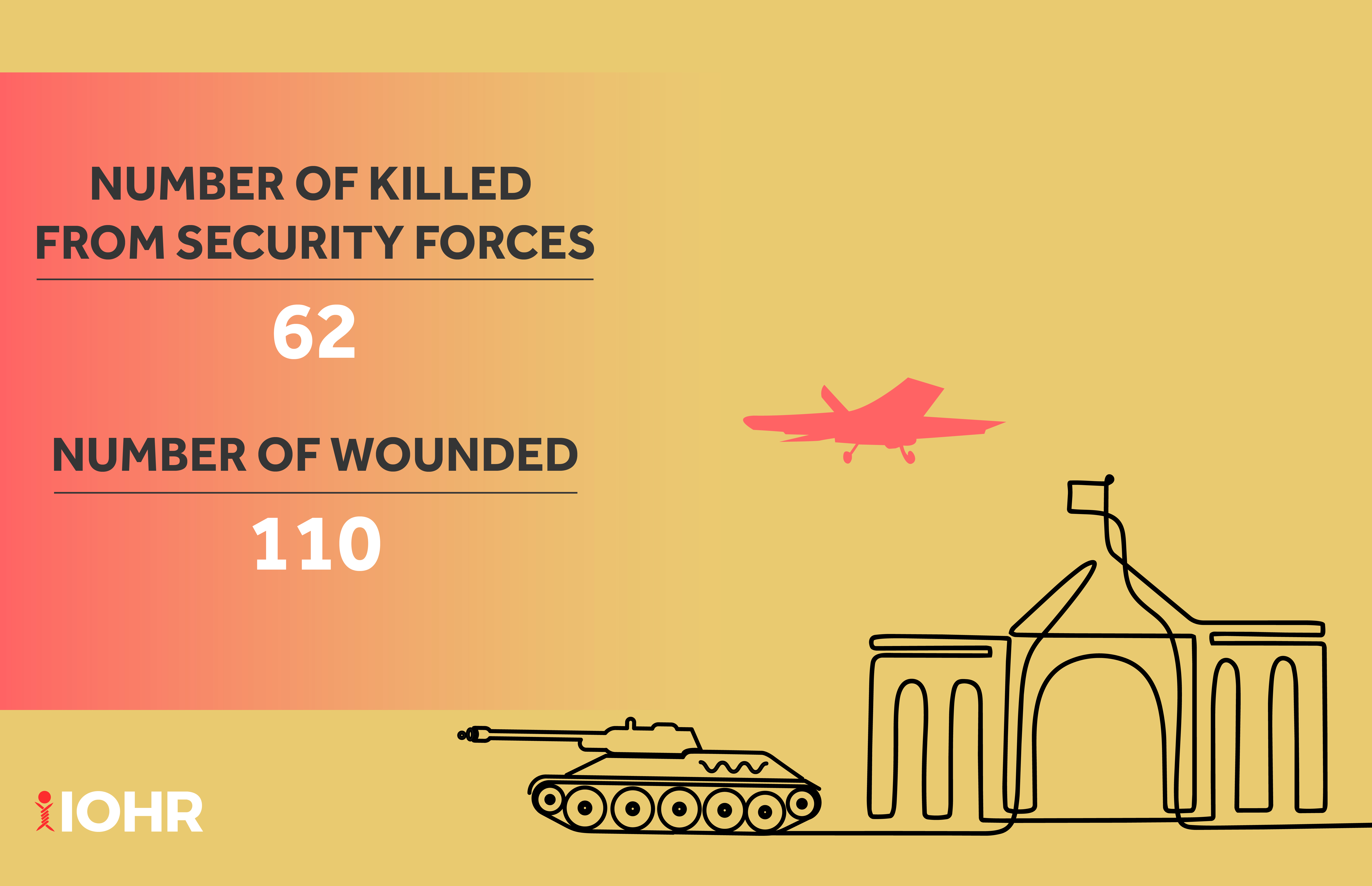
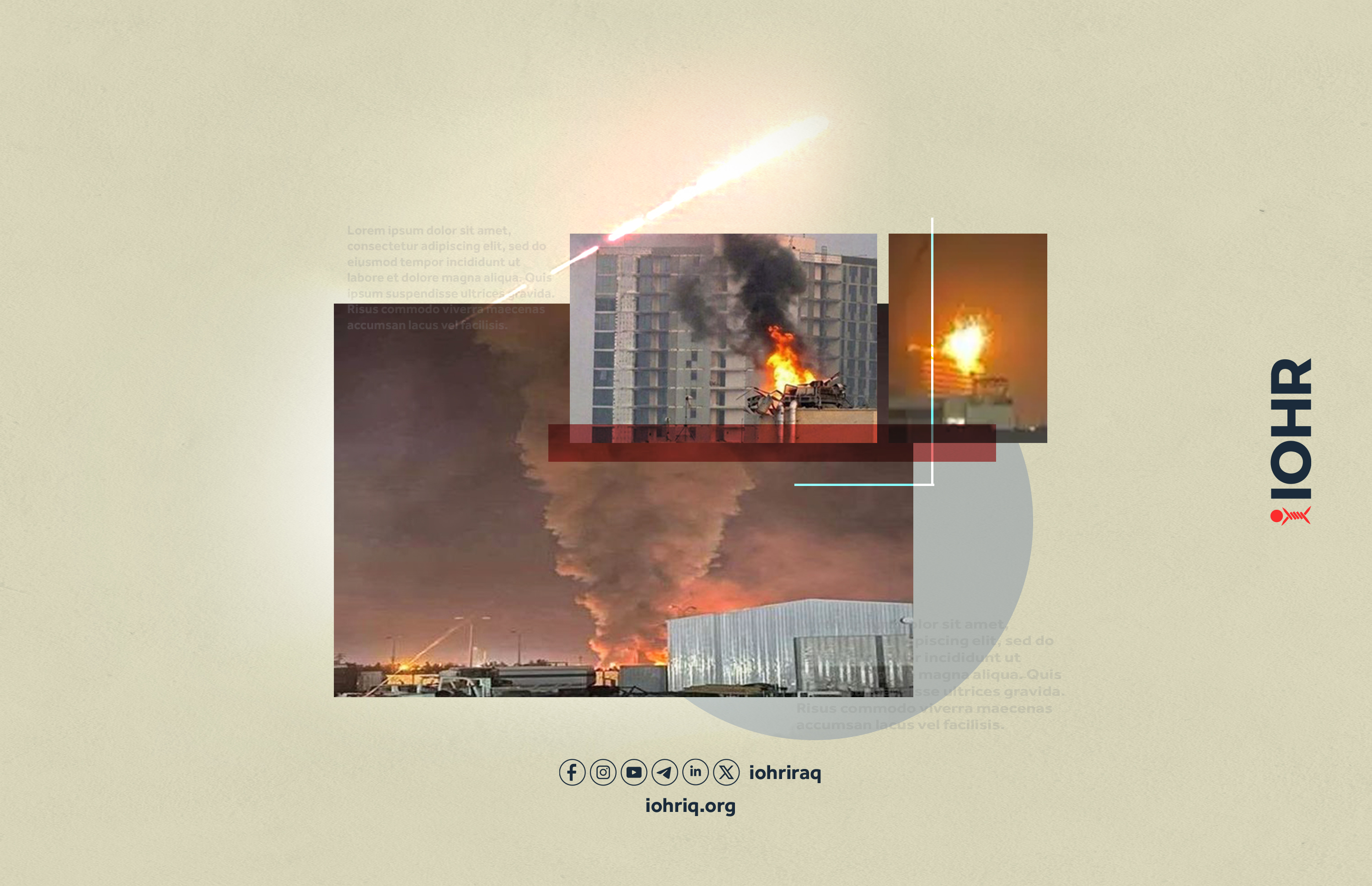
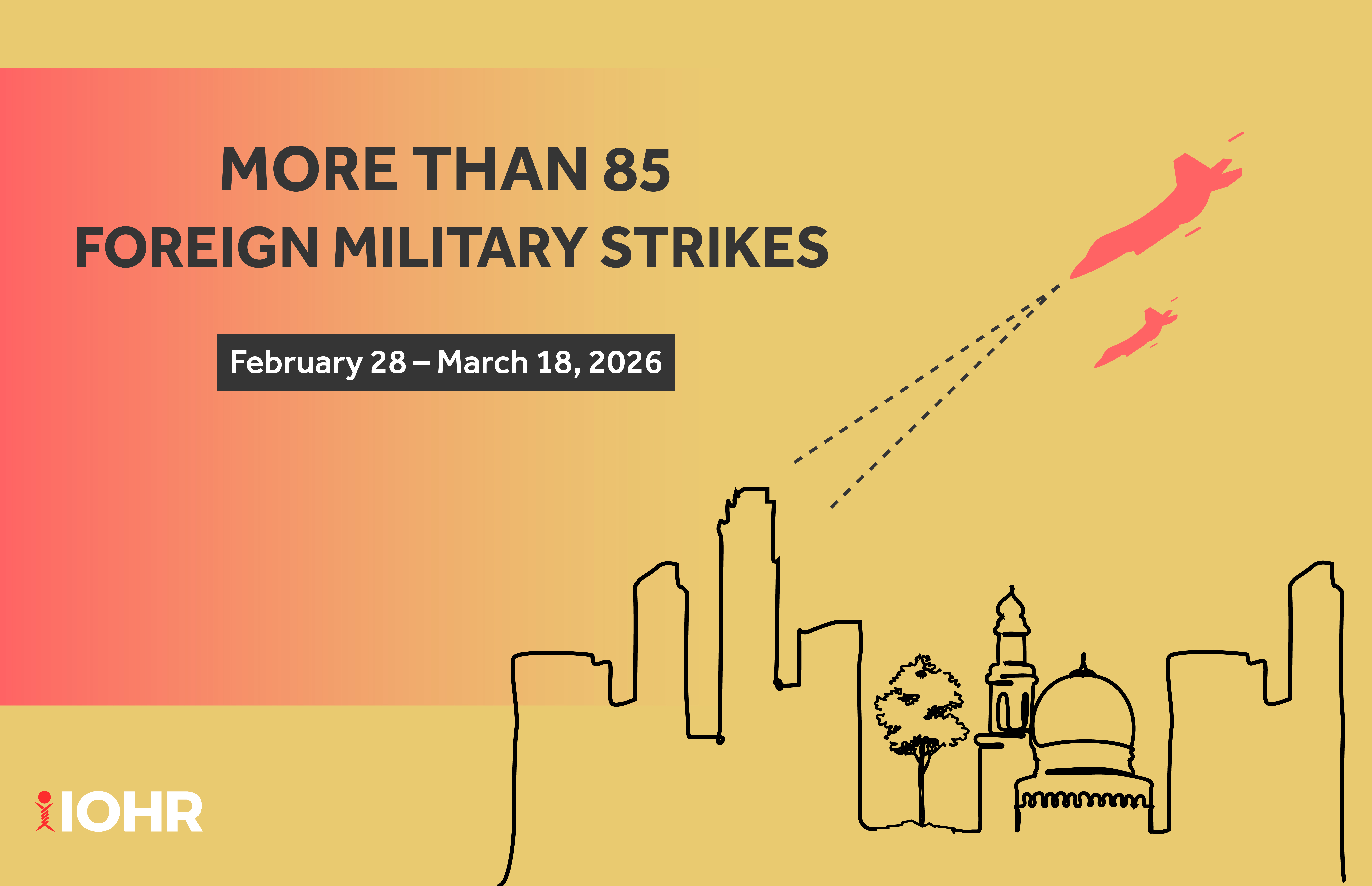
Documented Statistics (Feb 28 – March 18, 2026) The IOHR has recorded more than 85 external military strikes across the country during the period from February 28 to March 18, 2026. These attacks resulted in at least 62 fatalities and no fewer than 110 documented injuries. Verification processes are ongoing and may raise this toll, following intensive strikes targeting security personnel belonging to Iraqi state institutions in various cities.
Geographic and Field Analysis Field data indicates that the attacks were systematic and widespread rather than random. They were distributed across several provinces and operational axes, with a notable concentration in strategic border areas:
Field data indicates that the attacks were neither random nor limited, but were instead extensively distributed across several provinces and operational axes, with a notable concentration in strategic border areas.
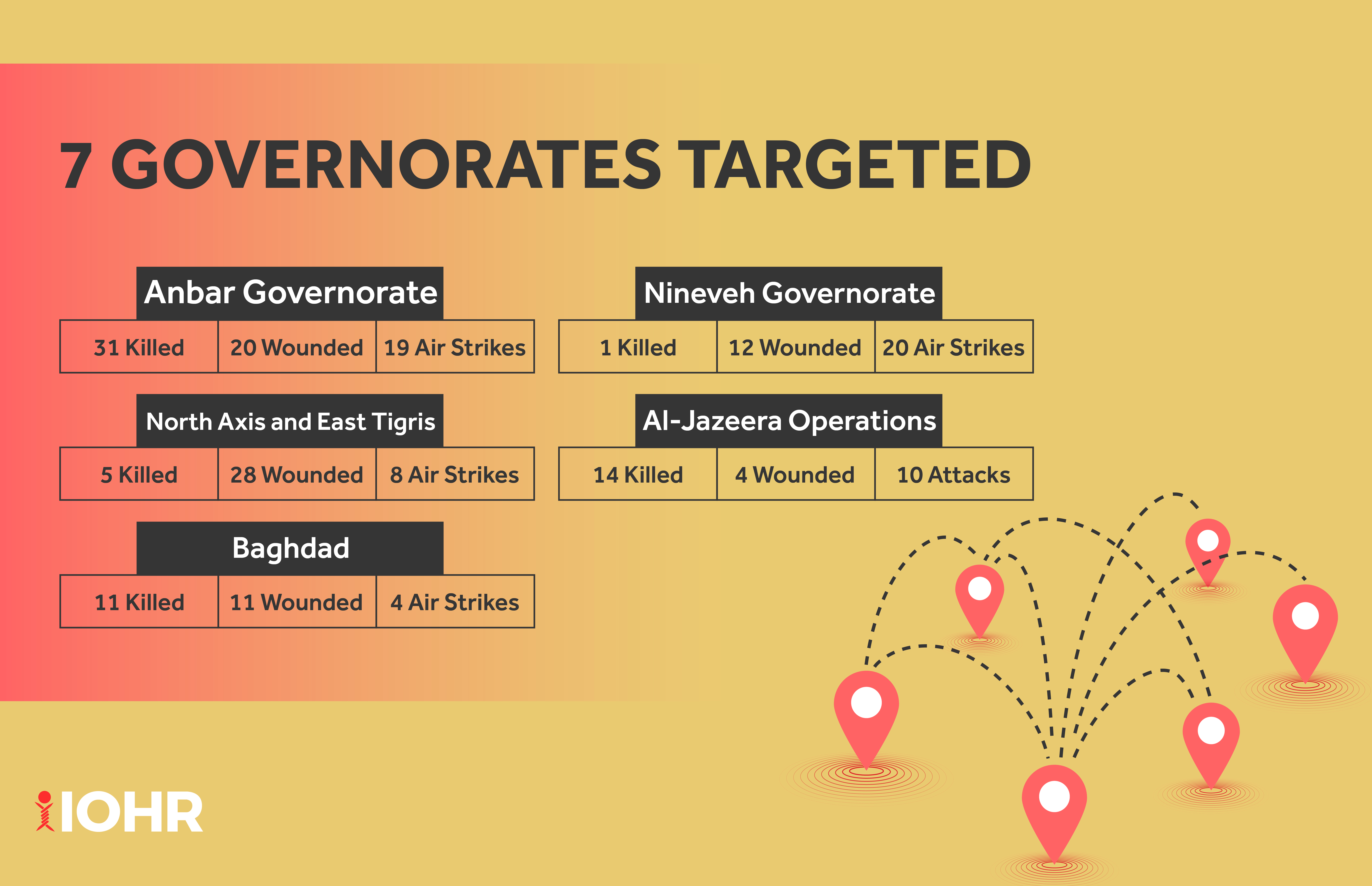
Anbar Province, particularly in Al-Qaim and Akashat, recorded the highest death toll with 31 fatalities and 20 injuries resulting from 19 airstrikes, reflecting the intensity of targeting in this vital sector. Similarly, in the Al-Jazira operations sector, 10 attacks claimed 14 lives and injured 4 others.
The shelling also extended to the capital, Baghdad, where 4 strikes resulted in 11 fatalities and 11 injuries within densely populated urban environments, raising serious concerns regarding civilian safety.
Meanwhile, in Nineveh Province, 20 airstrikes were executed, resulting in 1 fatality and 12 injuries, indicating intensive targeting of infrastructure and logistical sites. Furthermore, the northern and eastern Tigris axis witnessed 8 strikes that led to 5 fatalities and 28 injuries, reflecting the expanding scope and multiple fronts of these military operations.
The IOHR asserts that this wide geographic spread and high intensity categorize these operations as an "organized military campaign," placing them in direct conflict with international law. Under Article 2(4) of the UN Charter, the use of force against the territorial integrity or political independence of any state is prohibited. Conducting these strikes without the consent of the Iraqi government is a flagrant violation of sovereignty.
Furthermore, these operations raise critical issues regarding International Humanitarian Law (IHL), particularly the principles of Distinction, Proportionality, and Military Necessity, which mandate that parties avoid targeting civilians. Strikes in urban areas, such as those in Baghdad, reinforce fears of non-compliance with these principles.
On the national level, targeting official security formations—including the Popular Mobilization Forces (PMF), established by Law No. 40 of 2016 as an integral part of the Iraqi Armed Forces—is a direct assault on state institutions. This violates the Iraqi Constitution, specifically Article 1 (Sovereignty) and Article 9, which defines the military's role as protecting the nation, not as an open arena for external targeting.
Continuous Documentation The IOHR provides these statistics as part of an ongoing effort to document military operations that result in casualties and losses at all levels. The Observatory will continue to release subsequent data, including strikes on security sites, diplomatic missions, the Kurdistan Region, and vital infrastructure.
Call to Action The IOHR calls upon all authorities and influential stakeholders in Iraq to initiate urgent and serious efforts to avoid escalation and mitigate its impact on a country still suffering from the aftermath of previous wars. The continuation of strikes in populated areas exacerbates humanitarian risks and necessitates immediate national and international action to prevent further deterioration.