
The Iraqi Observatory for Human Rights expresses concern over the storming of an Iraqi Democracy Observatory preparatory meeting in Baghdad on 4 September 2026, followed by security forces entering the building without judicial authorization, in violation of Articles 17 and 38 of the Constitution. IOHR calls for an urgent, transparent investigation, accountability for violators, and affirms solidarity with civil society.
5 September 2026
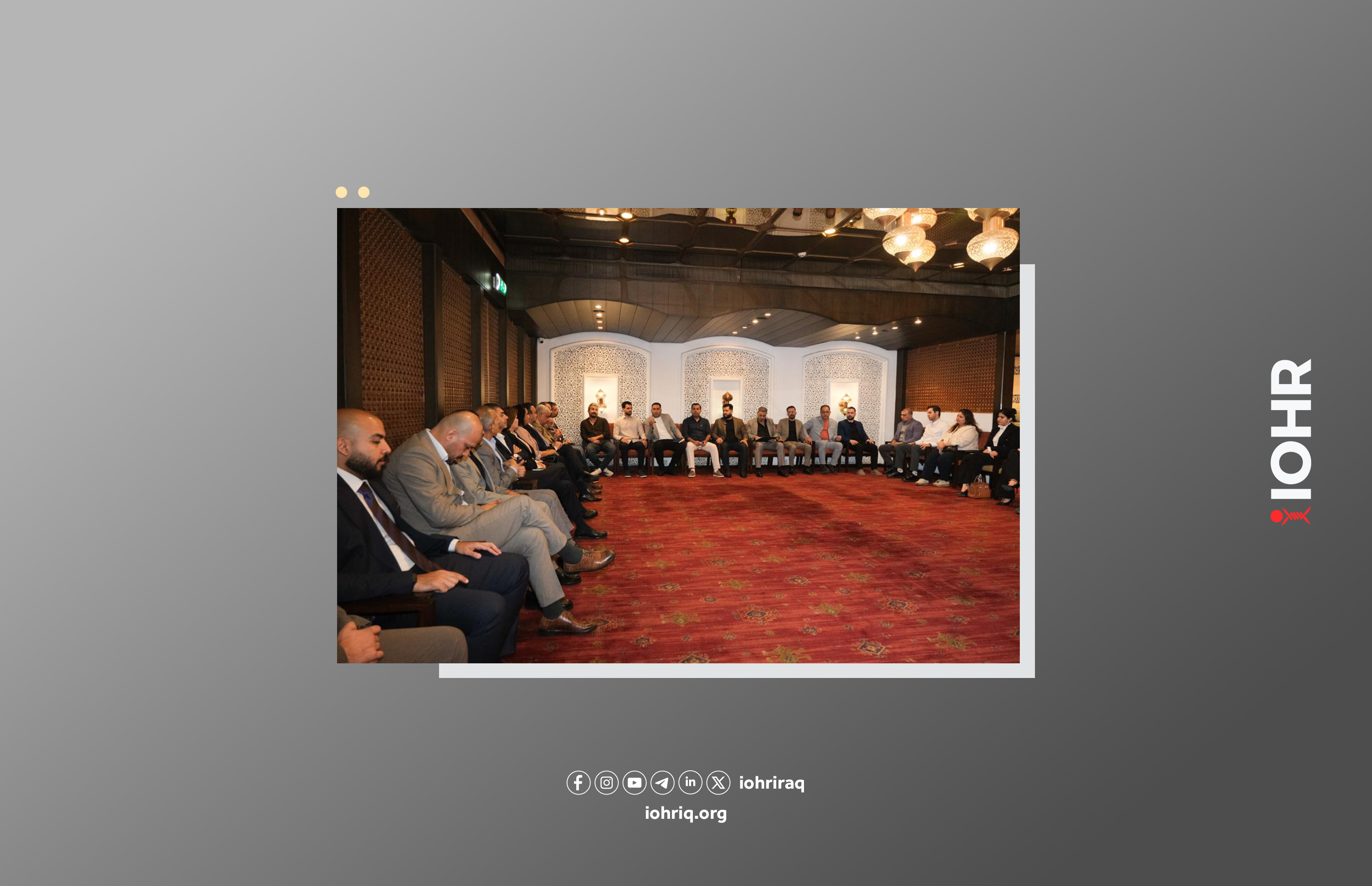
The Iraqi Observatory for Human Rights (IOHR) expresses grave concern over the storming of a preparatory meeting of the Iraqi Democracy Observatory (IDO) in Baghdad on the evening of Friday, 4 September 2026, when an individual forced his way into the meeting hall, followed by the entry of security forces into the building. The meeting brought together political, academic, and media figures alongside representatives of civil society organizations in preparation for IDO's second conference.
What took place is not an isolated incident. It reflects a growing pattern in which incitement, public agitation, and online mobilization are used to intimidate civic actors and to push state institutions, including the security forces, into acting outside their legal mandate. When a security response is triggered by noise rather than by law, the state's institutions are effectively placed at the service of whoever shouts loudest.
The Iraqi Constitution is unambiguous on this point. Article 38 guarantees freedom of expression, assembly, and peaceful demonstration, while Article 17 prohibits the entry of private premises without a judicial order. Iraq is also bound by Article 21 of the International Covenant on Civil and Political Rights, which protects the right of peaceful assembly and permits restrictions only where they are prescribed by law and necessary in a democratic society. A closed meeting of civil society organizations in a private venue falls squarely within these protections.
IOHR notes with particular alarm that the incident led IDO to suspend the work of its second conference. When a civic organization is forced to halt its activities because of intimidation, the message sent to every other organization in the country is that peaceful assembly comes at a price. This is precisely how civic space closes: not through formal bans, but through the accumulation of unpunished violations.
IOHR therefore calls on:
- The Prime Minister, in his capacity as Commander-in-Chief, and the Ministry of Interior to open a prompt, transparent, and independent investigation into the incident, to identify the individual responsible and the security unit involved, and to publish its findings.
- The Iraqi judiciary to ensure that any entry into private premises is subject to prior judicial authorization, and to hold accountable those who acted without it.
- The Council of Representatives and the High Commission for Human Rights to treat this incident as a test case for the protection of civic space in Iraq.
- The United Nations Assistance Mission for Iraq and diplomatic missions in Baghdad to raise the incident with the Iraqi authorities and to monitor its follow-up.
IOHR stands in full solidarity with the Iraqi Democracy Observatory and with all civil society organizations facing pressure for exercising their constitutional rights. We will continue to document such violations and to bring them before national and international bodies.
A state in which assemblies can be broken up by agitation and pressure, rather than protected by law, is a state whose institutions are no longer its own.