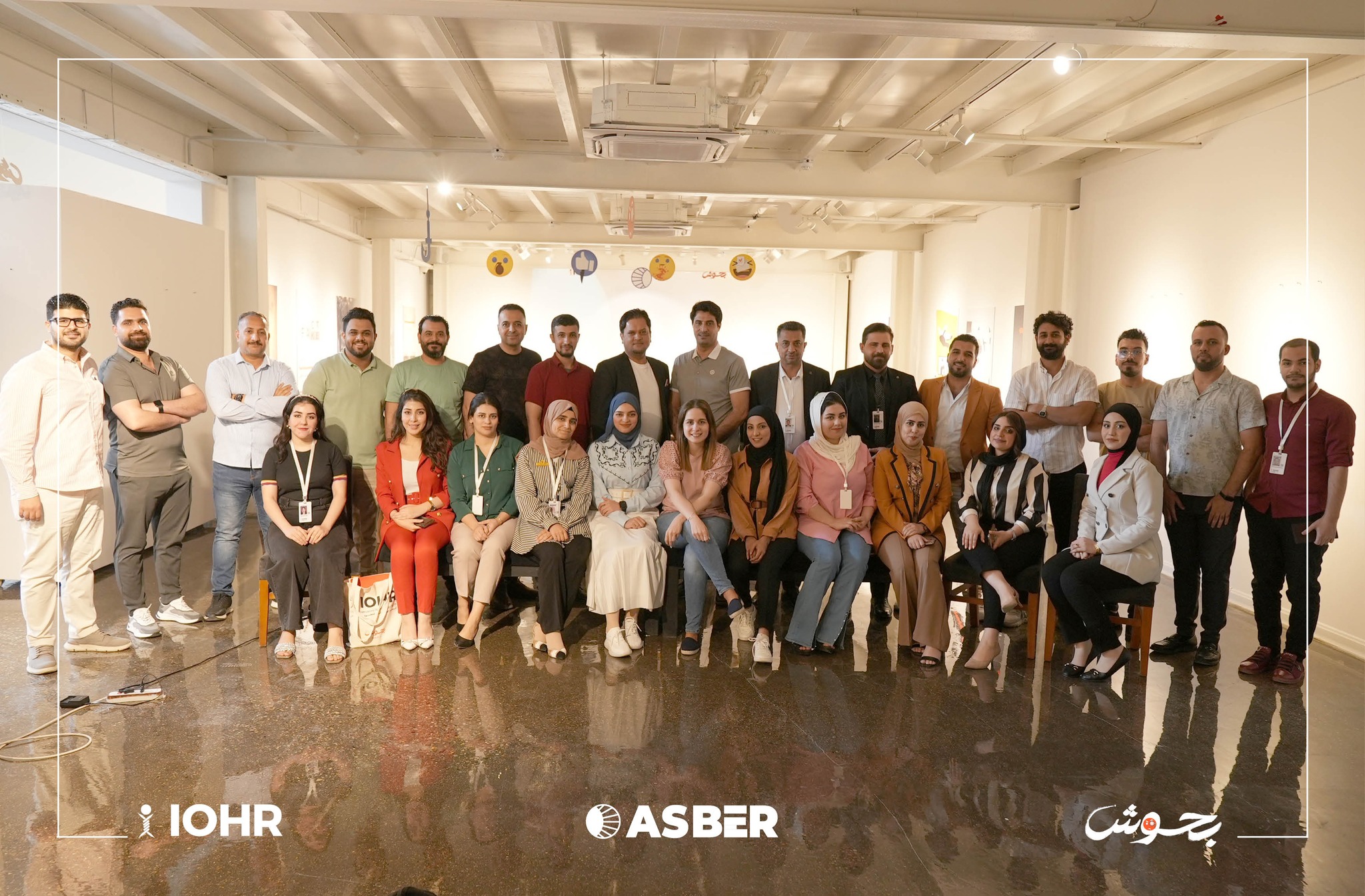

The Council of Rights and Freedoms (CRF) was formed on May 16, 2026, as an initiative by the Iraqi Observatory for Human Rights (IOHR), with the participation of more than 100 civil society organizations, alongside a number of human rights defenders, activists, legal experts, and media professionals. The Council aims to strengthen the system of rights and freedoms in Iraq, monitor violations, support the rule of law, defend fundamental freedoms, and work toward building a national environment based on justice and accountability, thereby consolidating the values of democracy, human rights, and the independence of institutions, among other related objectives.
June 1, 2026
The Council of Rights and Freedoms in Iraq is following with grave concern the government statements and measures regarding the file of restricting weapons to the state's authority, including what is being circulated about armed groups handing over their weapons to official institutions. The Council stresses that this file does not represent a political option or a situational measure; rather, it is a constitutional, legal, and national obligation that lies at the heart of the Iraqi state's responsibilities. It is also part of the government program that gained the confidence of the Parliament, which included clear and explicit provisions regarding extending state authority and ending the presence of weapons outside the framework of official institutions.
While CRF emphasizes that the Iraqi state bears full responsibility for protecting the right to life, security, and personal safety of all citizens—in accordance with the Iraqi Constitution and international obligations arising from the Universal Declaration of Human Rights and the International Covenant on Civil and Political Rights—this responsibility also includes protecting society from any threats or violations that may emanate from armed groups, unlawful entities, or forces outside the authority of the state.
Based on its monitoring of this sensitive file, the Council of Rights and Freedoms notes a number of fundamental observations, believing that ignoring them could turn these measures into superficial steps or incomplete understandings that do not achieve their primary purpose, nor contribute to building a state of law and institutions.
First:
Restricting weapons to the state's authority cannot be achieved through ambiguous or undeclared understandings or agreements hidden from public opinion. Every measure related to this file must enjoy the highest levels of transparency. Its foundations, stages, and guarantees must be clearly and publicly presented because the issue concerns national security and the future of the state, not closed political arrangements.
Second:
The Council of Rights and Freedoms calls on the Iraqi government to adopt a comprehensive national approach in addressing this file, based on dialogue and broad participation. This approach should include various political, social, and academic forces, civil society organizations, and national figures, thereby ensuring the building of a societal consensus that supports ending the phenomenon of weapons outside the state and consolidating the principle of the rule of law. Furthermore, CRF emphasizes that any measures taken in response to external pressures or considerations—without being based on a genuine national need and a firm internal will—will remain limited in impact and susceptible to reversal at the first political or security test.
Third:
The Council of Rights and Freedoms demands that the Iraqi government release clear and detailed information to the public regarding the process of weapon restriction. This must include the volume of targeted weapons, their types, the mechanisms for their collection or surrender, the implementation timeframe, and the entities responsible for supervision and follow-up, thereby enhancing public trust and closing the door to rumors and conflicting interpretations.
Fourth:
CRF stresses that any arrangements related to the weapons file must not turn into a cover for impunity or a means to settle files of violations, crimes, and corruption outside the framework of justice. Restricting weapons to the state's authority does not, under any circumstances, mean waiving legal liability or granting direct or indirect immunities to any party involved in violations or crimes against Iraqi citizens. No understandings may include provisions that obstruct the path of justice or limit the judiciary's ability to hold those responsible accountable.
Fifth:
The Council believes that the success of the process of restricting weapons to the state's authority is measured by the extent of the state's ability to effectively and comprehensively enforce its legitimate monopoly on force, and to end all forms of weapons outside official frameworks without exceptions or selectivity. This will enhance citizens' trust in the state, consecrate the principle of equality before the law, and restore respect for the prestige of state institutions.
The Council of Rights and Freedoms affirms that building a stable and just state begins with restricting the tools of force to constitutional institutions. Any delay or hesitation in achieving this goal represents a continuation of one of the most prominent sources of instability, an indirect violation of citizens' rights, and an undermining of the rule of law.
About the Council:
The Council of Rights and Freedoms (CRF) was formed on May 16, 2026, as an initiative by the Iraqi Observatory for Human Rights (IOHR), with the participation of more than 100 civil society organizations, alongside a number of human rights defenders, activists, legal experts, and media professionals. The Council aims to strengthen the system of rights and freedoms in Iraq, monitor violations, support the rule of law, defend fundamental freedoms, and work toward building a national environment based on justice and accountability, thereby consolidating the values of democracy, human rights, and the independence of institutions, among other related objectives.